Grand scaleReactive VFX
Technical Artist, Event Battle Environment
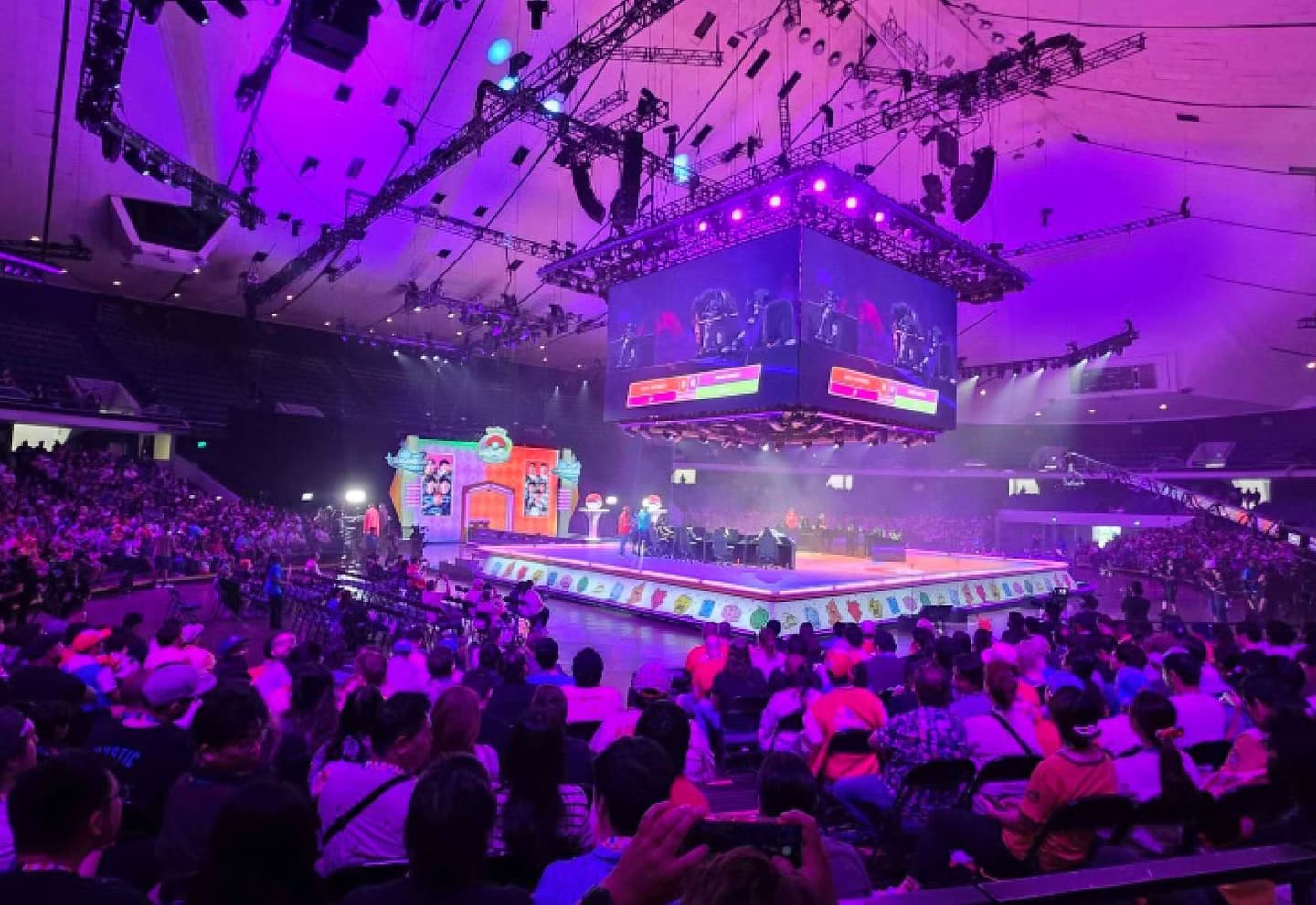
Pokémon World Championships 2025 Battle Arena
A championship arena built to feel ceremonial, reactive, and charged with competition.
Arena Premise
I helped build a special Pokémon GO battle arena for the 2025 World Championships, shaping the screen content, VFX, crowd energy, and animation language so the space felt grand, competitive, and unmistakably built for a world-stage event.
Creative Target 01
Grand Scale
The arena needed to feel broadcast-ready, not just battle-ready.
Creative Target 02
Reactive Systems
Barrier, lighting, and screen behavior all shifted with battle state to make the space feel alive.
Creative Target 03
Visual Pressure
Crowd motion, VFX, and camera beats helped sell the feeling of competition and ceremony.
Creative Target 04
Game Clarity
All of that spectacle still had to support readability, performance, and the battle itself.
What I Focused On
- Dynamic shaders for the video wall, crowd, and barrier systems.
- Metallic and electric surface treatments to sharpen the arena mood.
- State-driven barrier and lighting changes tied to battle flow.
- Video wall camera animation, plus technical support and logic for the 3D artist.
Interactive Barrier Study
This interactive shader section shows the kind of barrier behavior the arena used to communicate energy and state changes.
Live SDF Honeycomb Shader Playground
Browser-safe WebGL preview of the production shader idea.
Live Preview
Live Controls
Shader Code
click to edit
Compiling shader...
Outcome
- The final arena gave Pokémon GO a battle space that felt more theatrical, more competitive, and more event-specific without losing clarity.
- For me, it was a good example of using technical art systems to make presentation, atmosphere, and gameplay support each other at the same time.