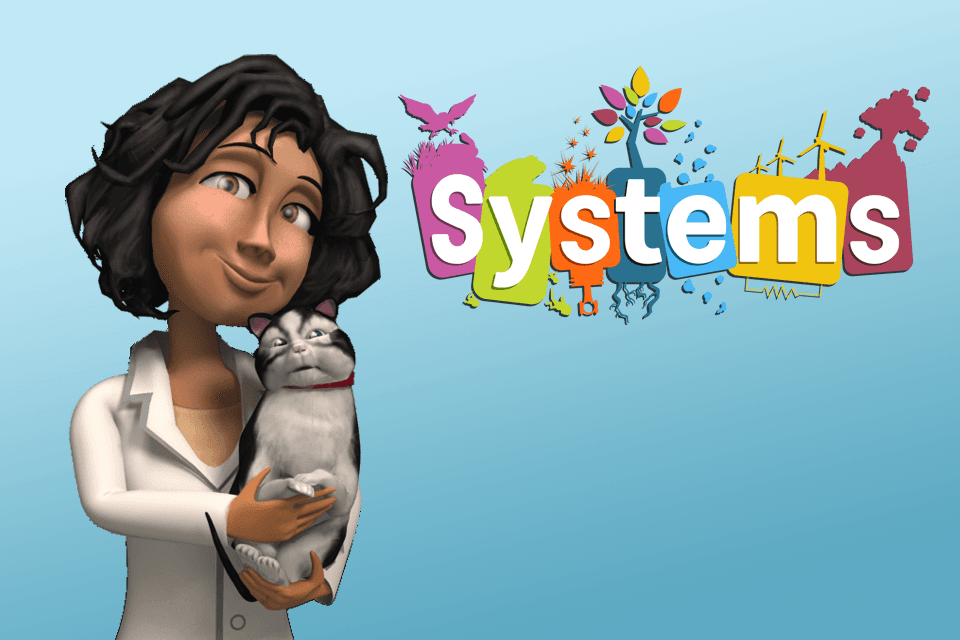
SYSTEMS-Virtual Vet

Technical Lead, Educational Game Development

SYSTEMS-Virtual Vet

Project Overview

I led technical development for an award-winning educational game that taught elementary and middle school students body systems through interactive veterinary cases, combining framework engineering, art production, and gameplay-focused learning design.

Project Goal

SYSTEMS: Virtual Vet was designed to help students learn science by stepping into the role of veterinary assistants, diagnosing and treating virtual animal patients while working through core body systems.

The experience was built around applied learning. Instead of only presenting facts, the game asked students to analyze symptoms, interpret information, and connect concepts across systems such as musculoskeletal, cardiovascular, gastrointestinal, and endocrine.

Role & Scope

As Technical Lead, I oversaw a small team while contributing across both engineering and art production.

I provided much of the project framework in code, helped guide the use of pipeline tools, and built a large portion of the implementation that supported the game itself.

Alongside development, I created 3D and 2D art assets, concept art, and animation, working across Unity, Autodesk Maya, Adobe tools, and related content workflows to keep the project cohesive from prototype through production.

Building the Experience

The project needed to function as both a game and a teaching tool, which meant the software had to support clarity, pacing, and accessibility while still feeling engaging to students.

A large part of the work was building systems flexible enough to support multiple interactive learning scenarios while keeping the player experience readable and approachable.

That blend of framework engineering and content creation was central to the project. The underlying tools and implementation had to stay dependable, but the final experience also needed warmth, character, and a strong visual identity that made the material inviting.

Collaboration & Recognition

Virtual Vet was developed in collaboration with researchers and educators at the University of Georgia and was shaped around real learning goals as well as player engagement.

The game was later recognized by the International Serious Play Awards, earning a Bronze Medal for supporting higher-level thinking in elementary students.

That outcome reflected the larger goal of the project: building educational software that felt thoughtfully crafted rather than purely instructional.

Outcome

SYSTEMS: Virtual Vet gave students a more active way to learn science concepts while giving the team a production pipeline capable of supporting a visually rich, content-heavy interactive experience.

For me, it was an early project that deeply shaped how I think about technical art leadership: strong tools, clear systems, and thoughtful presentation all matter more when the audience is learning through play.